8 Weeks
80 mg Vial- VialsKLOW Peptide Blend (80mg) mg vials
- 5
- U-100 Syringesone sterile syringe per dose
- 61
- BAC Water30 mL multi-dose vials
- 1
- Alcohol Padsvial stopper + skin prep
- 117
56 total doses over 8 weeks
GHK-Cu + BPC-157 + TB-500 + KPV Blend
An 80 mg four-peptide vial that takes the GLOW formula (50 mg GHK-Cu, 10 mg BPC-157, 10 mg TB-500) and adds 10 mg KPV, the anti-inflammatory alpha-MSH tripeptide. KLOW is positioned for users who want skin and tissue remodeling plus targeted inflammation control for gut, skin, or autoimmune-type flare-ups.
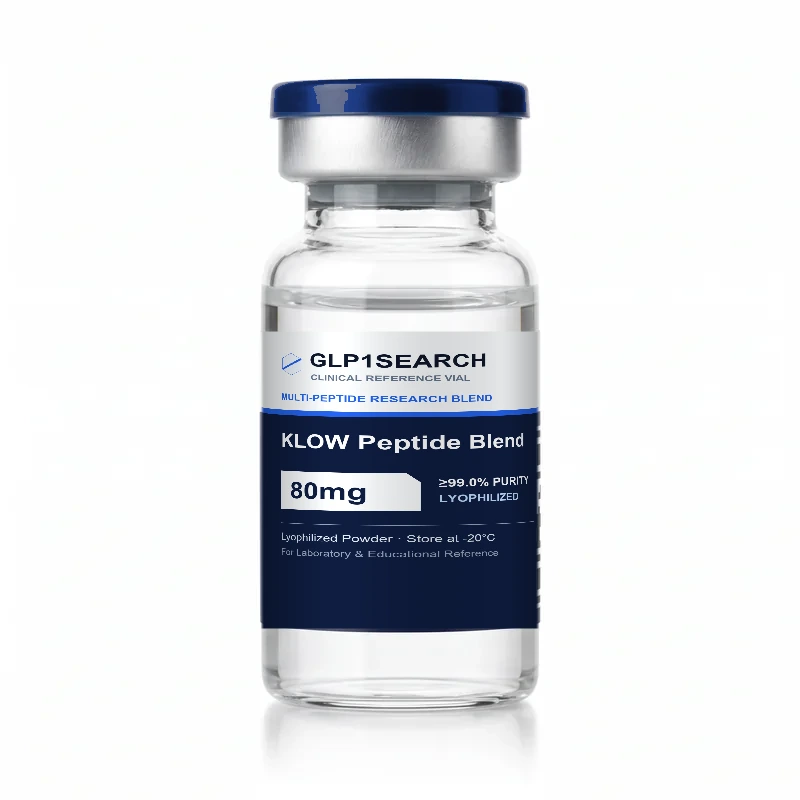 KLOW Peptide Blend (80mg) Reference Vial
Multi-Peptide Vial Composition
Select your vial strength to update all reference concentrations, dosage tables, and syringe draws on this page.
Arithmetic summary: Reconstituting a 80 mg KLOW Peptide Blend (80mg) vial with 2 mL of bacteriostatic water yields 40 mg/mL. Every 10 units (0.10 mL) on a U-100 insulin syringe delivers 4000 mcg.
KLOW Peptide Blend (80mg) · 80 mg VialSelect a row to preview the draw on the syringe. Values are reference figures from the literature, not medical advice.
| Phase | Dose | mL | Units | Doses/Vial |
|---|---|---|---|---|
| BeginnerOnce daily · Weeks 1–2 | 2 mg (1.25 mg GHK-Cu / 250 BPC / 250 TB / 250 KPV) | 0.05 | 5 | 40 |
| StandardOnce daily · Weeks 3–4 | 4 mg (2.5 mg GHK-Cu / 500 BPC / 500 TB / 500 KPV) | 0.10 | 10 | 20 |
| TargetOnce daily · Weeks 5–8+ | 6 mg (3.75 mg GHK-Cu / 750 BPC / 750 TB / 750 KPV) | 0.15 | 15 | 13 |
U-100 syringe drawn to 5 units (0.05 mL), 2 mg (1.25 mg GHK-Cu / 250 BPC / 250 TB / 250 KPV).
Dose exceeds this syringe's capacity. Choose a larger syringe or reduce the diluent volume.
Click any dosing tier row above to preview that exact draw on the U-100 syringe scale.
Four steps, in order. Work on a clean surface with washed hands and swab every vial top with alcohol first.
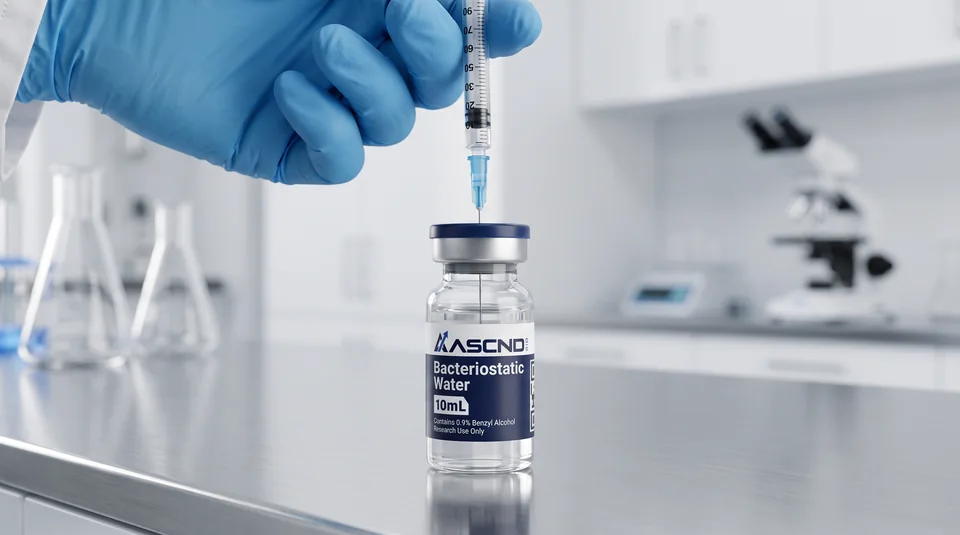 Step 01
Draw 2 mL of bacteriostatic water (0.9% benzyl alcohol) into a sterile syringe. Use bacteriostatic, not plain sterile water, so the multi-dose vial stays preserved between draws.
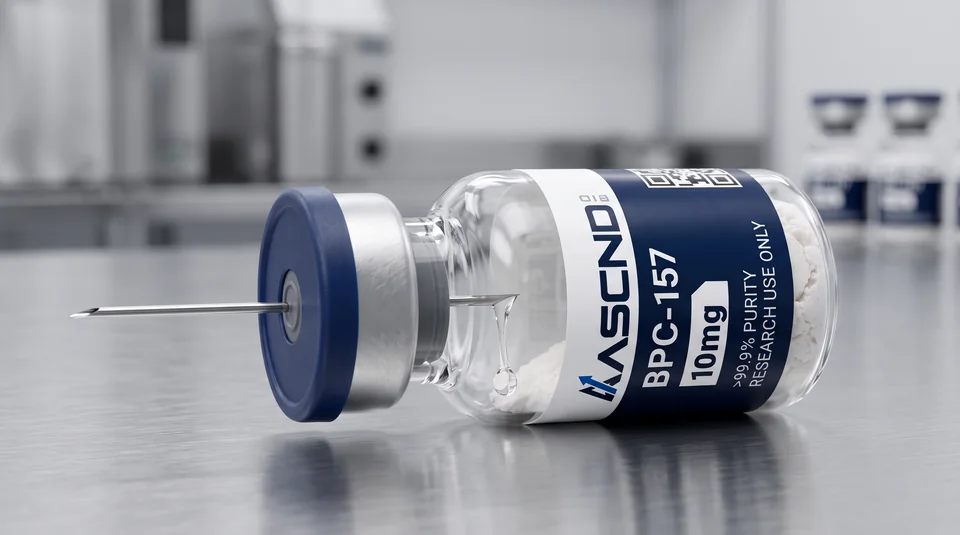 Step 02
Pierce the stopper and angle the needle at 45° so the water runs slowly down the inside glass wall. Never spray directly onto the lyophilized puck: the jet foams the solution and can denature fragile peptide chains.
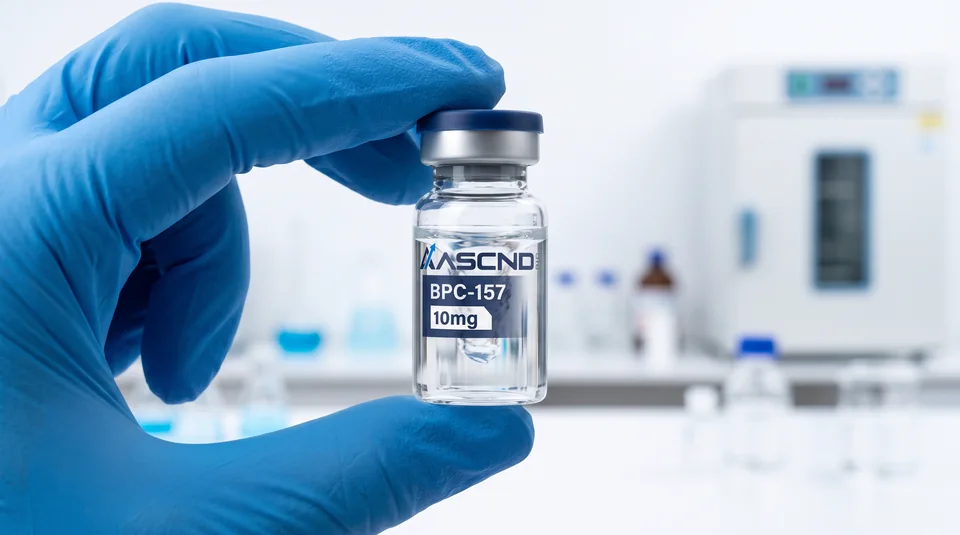 Step 03
Roll the vial gently between your fingers or swirl in a slow circle until the liquid is 100% clear with no undissolved particles. Shaking shears peptide bonds and traps air bubbles; if it clouds, let it rest in the fridge for 15 minutes.
 Step 04
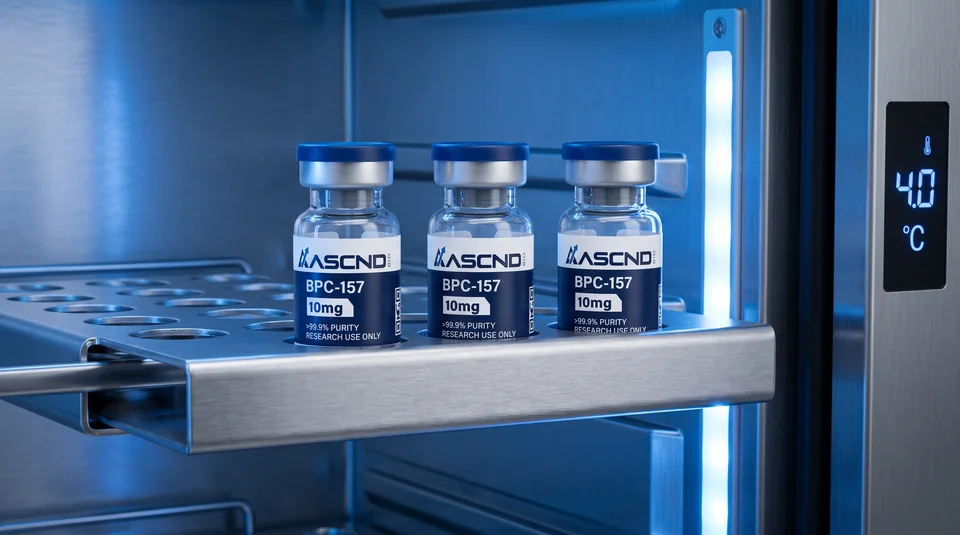
Write the reconstitution date and concentration on the vial. Refrigerate upright at 2–8 °C (36–46 °F), protected from light, and use within 28–30 days. Do not freeze the reconstituted liquid.
Convert a lyophilized peptide vial amount and bacteriostatic water volume into a reconstitution concentration, then translate your protocol dose and schedule into exact U-100 syringe units and multi-week vial supplies.
Enter the peptide amount in the vial and the volume of bacteriostatic or sterile water you plan to add.
Concentration
How much peptide each mL of solution contains after mixing.
5 mg/mL
Enter the dose from your protocol, select your dosing schedule, and pick the insulin syringe you are using.
100-unit (1 mL): marks every 2 units. Standard barrel for draws up to 100 units.
Draw to
Pull plunger seal to line 5
Volume
0.05 mL
Delivers 250 mcg
Doses per vial
20
Lasts 20 days (Once daily)
4-Week Schedule Supply
2 vials
28 doses · 2.0 mL BAC water
| Duration | Total Peptide | Vials Required | U-100 Syringes | BAC Water |
|---|
For educational and research calculations only. Always confirm calculations independently before use.
Plan vials, U-100 insulin syringes, bacteriostatic water, and sterile alcohol prep pads by protocol duration.
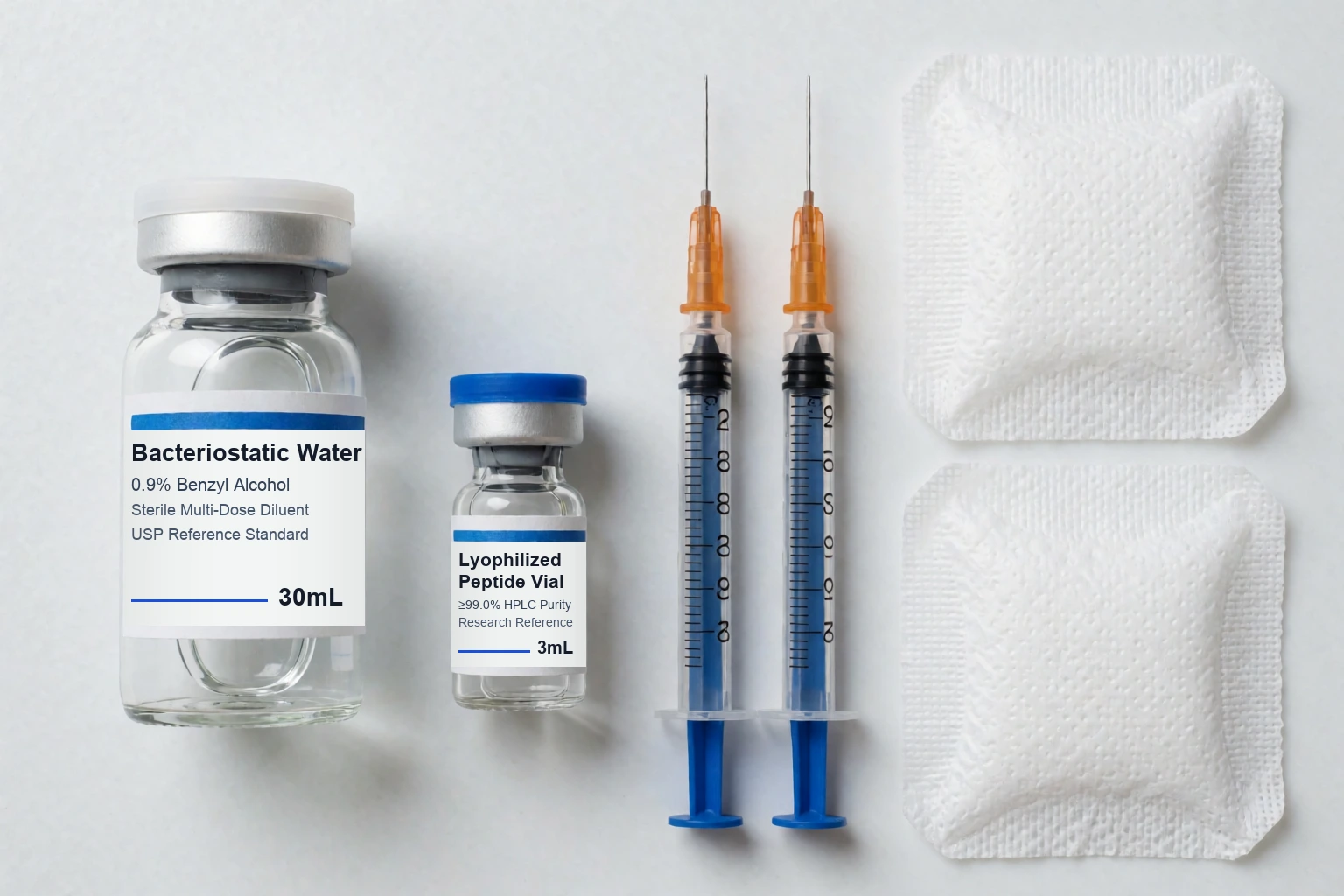
KLOW Peptide Blend (80mg) Vials (80 mg each):
U-100 Insulin Syringes & Alcohol Pads:
56 total doses over 8 weeks
84 total doses over 12 weeks
112 total doses over 16 weeks
Synergistic Protocols
Common research and clinical combinations pairing KLOW Peptide Blend (80mg) with complementary pathways.
Accelerates tendon, ligament, muscle, and joint recovery by pairing localized angiogenesis (BPC-157) with systemic actin upregulation (TB-500).
| Compound | Protocol Dose | Timing & Route |
|---|---|---|
| BPC-157 | 250–500 mcg daily (10–20 U on 5mg/2mL) | Once or split AM/PM SubQ |
| TB-500 (Thymosin Beta-4) | 2.0–2.5 mg twice weekly (or 350–500 mcg daily) | SubQ abdominal or near injury |
Stacking Note: Can be drawn into the same insulin syringe immediately prior to injection or purchased as a pre-mixed 10mg/10mg blend vial.
Combines high-dose copper peptide (50 mg GHK-Cu) with 10 mg BPC-157 and 10 mg TB-500 to remodel collagen, elastin, skin density, and connective tissue while minimizing copper injection sting.
| Compound | Protocol Dose | Timing & Route |
|---|---|---|
| GHK-Cu (Copper Peptide) | 1.75–2.5 mg per daily draw | Once daily SubQ (3 mL BAC in 70 mg vial) |
| BPC-157 | 350–500 mcg per daily draw | Co-administered in blend |
| TB-500 | 350–500 mcg per daily draw | Co-administered in blend |
Stacking Note: Standard 70 mg GLOW vial reconstituted with 3.0 mL BAC water: drawing 7–10 units delivers ~1.6–2.3 mg GHK-Cu + 330–460 mcg each of BPC-157 and TB-500.
Adds 10 mg KPV (alpha-MSH tripeptide) to the GLOW formula to downregulate NF-kB/TNF-alpha systemic and gastrointestinal inflammation.
| Compound | Protocol Dose | Timing & Route |
|---|---|---|
| GHK-Cu + BPC-157 + TB-500 | 50 mg / 10 mg / 10 mg base | Once daily SubQ (3 mL BAC in 80 mg vial) |
| KPV Tripeptide | 350–500 mcg per daily draw | Co-administered in 80 mg KLOW vial |
Stacking Note: Ideal for protocols targeting simultaneous gut mucosal repair, autoimmune calm, and dermal/tendon remodeling.
Rotate sites with every injection so no single area is used twice in a row. Swab with alcohol and let it dry for 10 seconds before injecting.
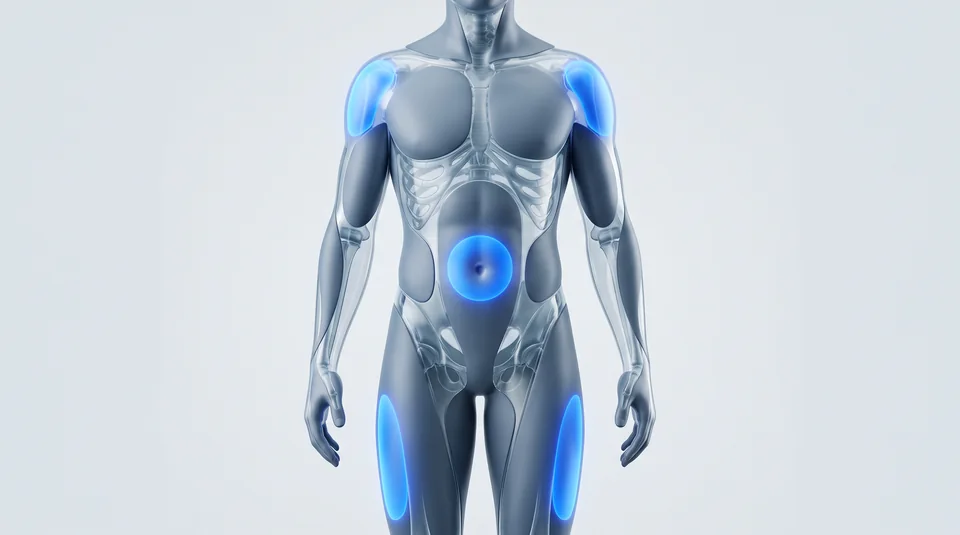
Zone 01
Abdomen
≥ 2 in away from navel
Zone 02
Outer Thigh
Middle third, anterior-lateral
Zone 03
Upper Arm
Posterior / outer tricep pad
90° · 4–8 mm (31 G) short needle
Standard U-100 insulin syringe: pinch a light fold and insert straight in at 90°.
45° · 12.7 mm (1/2 in) needle
Longer needle or leaner area: pinch a 1-inch fold and enter at 45° into fat.
Aseptic Injection Checklist
• Use a brand-new sterile U-100 syringe for every draw (never reuse needles).
• Swab both the vial rubber stopper and injection site with 70% isopropyl alcohol and let dry.
• Rotate clockwise around the abdomen or alternate left/right thigh to prevent lipohypertrophy.
Lyophilized Powder (Unmixed)
Freezer −20 °C Long-Term · Fridge Short-Term
Unmixed freeze-dried vials stay stable for months in the refrigerator and 1–2+ years at −20 °C (0 °F) in the dark. Let the vial warm to room temperature before opening.
Reconstituted Liquid (Mixed)
Refrigerate 2–8 °C (36–46 °F) · Use Within 30 Days
Keep refrigerated and out of light once mixed with bacteriostatic water. Never freeze reconstituted liquid — ice crystals shear the dissolved peptide chains.
Pharmacology & Evidence
How It Works
Builds on the GLOW stack: GHK-Cu drives collagen and matrix remodeling, BPC-157 and TB-500 supply angiogenic and cell-migration repair signals. KPV (Lys-Pro-Val) adds inhibition of NF-κB activation and reduced pro-inflammatory cytokine release (IL-6, TNF-α) in epithelial and immune cells, which is why the blend is often chosen for inflammatory skin and gut conditions.
subcutaneous
2-4mg · Daily
4-8 weeks
subcutaneous
4-6mg · 5x weekly
8-12 weeks
Research use only. Not medical advice.
KPV reduced intestinal inflammation and NF-κB activity in rodent colitis, including when delivered orally via nanoparticles
Copper peptide increased collagen synthesis and improved skin density and elasticity in human dermal studies
Research compound; not FDA-approved. None of the four components is approved for injectable human use.
Clinical Profile
Provider Directory
Sold as an 80 mg lyophilized vial by a smaller set of research vendors than GLOW. Ask for a four-peptide COA; KPV is the component most often under-reported. Expect a blue-tinted cake from the copper peptide.
Free Guide
New studies, regulatory changes and sourcing notes on the peptides you follow. One email a week, no spam.
Free. No spam. Unsubscribe anytime. From GLP1Search.
Use location pages to compare clinics with peptide therapy signals and verify clinical oversight before treatment.
Related peptides