Peptides
How To Reconstitute Peptides: Step-By-Step Guide (2026)
Step-by-step research reference for reconstituting lyophilized peptides with bacteriostatic water, reading insulin syringe units, and storing the vial.
Open The CalculatorWhat You Need Before You Start
Reconstitution means adding a sterile liquid to a freeze-dried (lyophilized) peptide so it can be measured and drawn into a syringe. The supplies are simple: the peptide vial, a bottle of bacteriostatic water (sterile water with 0.9% benzyl alcohol as a preservative), alcohol pads, a 3 mL syringe with a larger needle for mixing, and U-100 insulin syringes for measuring doses.
Work on a clean, dry surface and wash your hands first. Let the vial and the water come to room temperature, which reduces foaming and stress on the peptide. Check the vial for the label amount in milligrams, because every calculation depends on it.
This guide is a research reference, not medical advice. Peptide use should be directed by a licensed clinician.
The 4 Steps To Reconstitute A Peptide
Step 1, prepare the vial. Remove the plastic cap and wipe the rubber stopper with an alcohol pad. Let it air dry for a few seconds. Do the same for the bacteriostatic water bottle.
Step 2, add bacteriostatic water. Draw your chosen amount of water into the mixing syringe, usually 1 to 3 mL. Insert the needle through the stopper and aim it at the inside wall of the vial. Press the plunger slowly so the water runs down the glass instead of blasting the powder.
Step 3, dissolve gently. Remove the needle and swirl the vial slowly or roll it between your palms. Do not shake it, because agitation can damage fragile peptide chains. Most peptides clear in under a minute. Some take a few minutes. The finished liquid should be clear, without particles or cloudiness.
Step 4, label and refrigerate. Write the date and the concentration on the vial and place it in the refrigerator. Then use the dosage chart or the calculator to find your syringe units.
How To Reconstitute your peptide
Four steps, in order. Work on a clean surface with washed hands and swab every vial top with alcohol first.
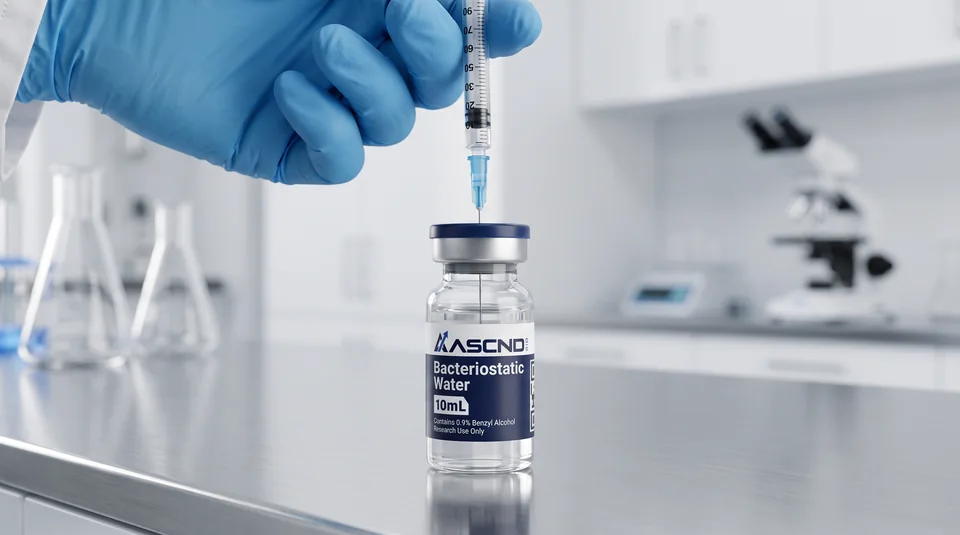 Step 01
Draw Bacteriostatic Water
Draw 2 mL of bacteriostatic water (0.9% benzyl alcohol) into a sterile syringe. Use bacteriostatic, not plain sterile water, so the multi-dose vial stays preserved between draws.
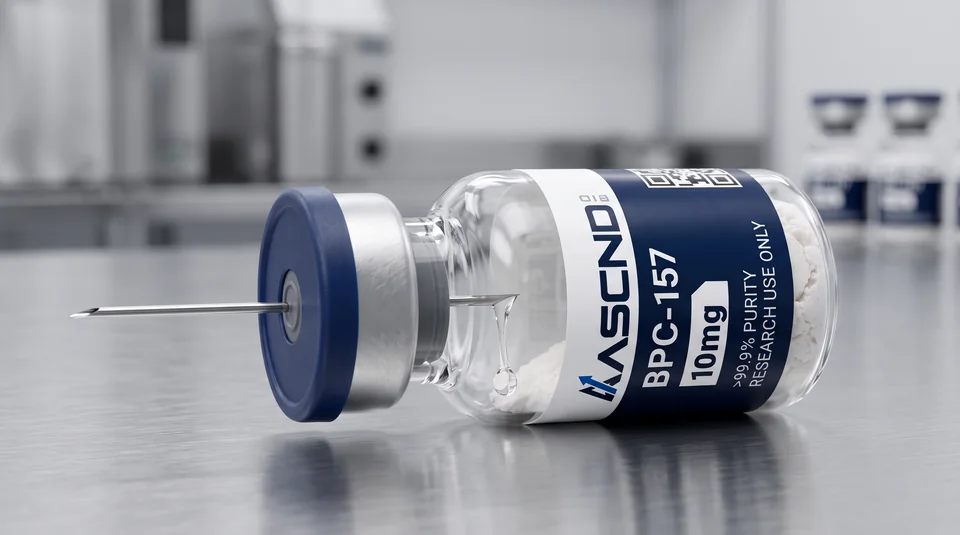 Step 02
Equalize & Trickle Down The Glass Wall
Pierce the stopper and angle the needle at 45° so the water runs slowly down the inside glass wall. Never spray directly onto the lyophilized puck: the jet foams the solution and can denature fragile peptide chains.
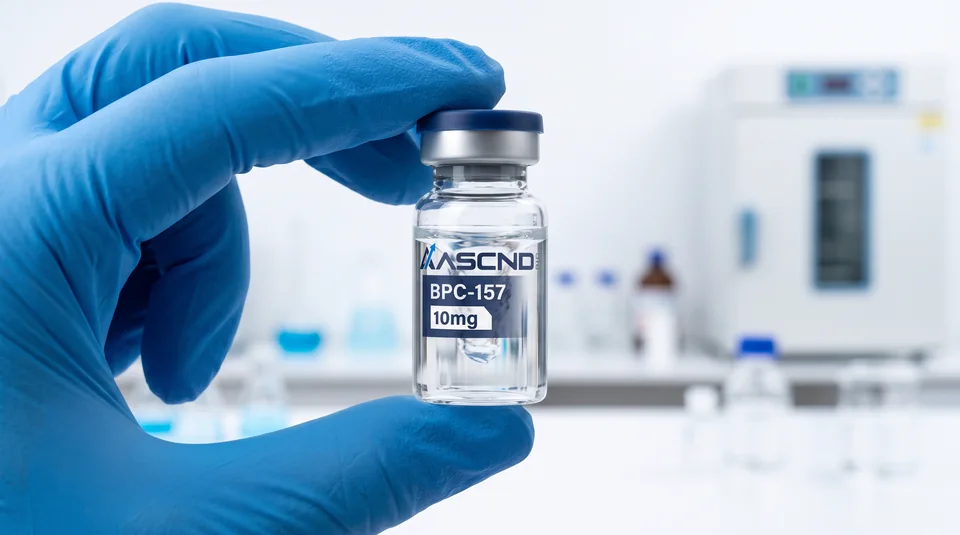 Step 03
Gently Roll, Never Shake
Roll the vial gently between your fingers or swirl in a slow circle until the liquid is 100% clear with no undissolved particles. Shaking shears peptide bonds and traps air bubbles; if it clouds, let it rest in the fridge for 15 minutes.
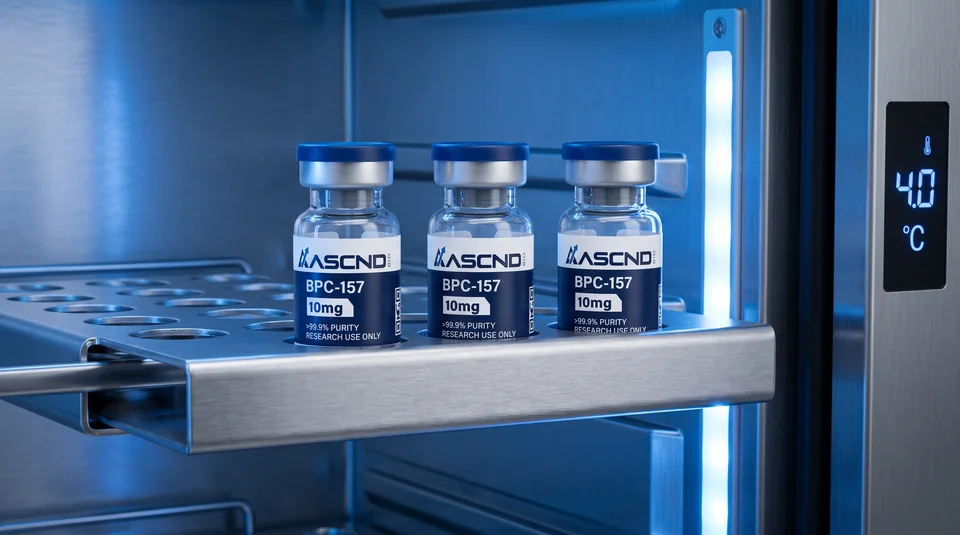 Step 04
Label & Store At 2–8 °C (36–46 °F)
Write the reconstitution date and concentration on the vial. Refrigerate upright at 2–8 °C (36–46 °F), protected from light, and use within 28–30 days. Do not freeze the reconstituted liquid.
Common Reconstitution Mistakes
The most frequent error is confusing units with milligrams. On an insulin syringe, one unit is 0.01 mL. It is a volume, not a drug amount. How much peptide is in each unit depends entirely on the vial size and the water you added.
Other mistakes include shaking the vial, spraying water directly onto the powder, reusing needles, using tap water or plain sterile water for a multi-dose vial, and forgetting to write the mixing date. Using too little water can also make accurate draws hard, since a dose of 2 units is nearly impossible to read reliably. Adding more water spreads the same peptide across more units and makes each draw easier to measure.
Storage After Reconstitution
Lyophilized peptide is generally stable at room temperature for short periods and in the freezer for long-term storage. Once reconstituted, the vial belongs in the refrigerator at 2 to 8 degrees Celsius, away from light and out of the freezer door, where temperatures swing.
Research references commonly allow 28 to 30 days for a refrigerated vial mixed with bacteriostatic water. Some compounds degrade sooner. Throw the vial away if the liquid turns cloudy, changes color, or shows floating particles. A vial mixed with plain sterile water has no preservative and is treated as single-use.
Worked Example: Reconstituting BPC-157
Say you have a 5 mg vial of BPC-157 and add 2 mL of bacteriostatic water. The concentration is 5 mg divided by 2 mL, or 2.5 mg per mL. A U-100 syringe has 100 units per mL, so each unit holds 25 mcg.
For a 250 mcg research dose, divide 250 by 25 and draw 10 units, which is 0.1 mL. The vial contains 5,000 mcg, so it holds 20 doses of 250 mcg. At one dose per day that is 20 days, comfortably inside the 28-day window.
Change any number and the answer changes. With 1 mL of water the same dose is 5 units, and with 3 mL it is 15 units. The calculator below runs this math for any vial, water volume, and dose.
Key Takeaways
- Add bacteriostatic water slowly down the vial wall and never shake the vial.
- One unit on a U-100 syringe is 0.01 mL, a volume and not a drug amount.
- Units to draw equal dose divided by mcg per unit, where mcg per unit is vial mg times 1000 divided by water mL divided by 100.
- Refrigerate after mixing and use within about 28 to 30 days.
Common Questions
How much bacteriostatic water should I add?
Any volume works if you recalculate the syringe units. Most people use 1 to 3 mL so the draw is large enough to read accurately.
Can I use sterile water instead of bacteriostatic water?
You can, but sterile water has no preservative, so the vial is generally treated as single-use and used within about a day.
How long does a reconstituted peptide last?
Typically 28 to 30 days refrigerated when mixed with bacteriostatic water, though stability varies by compound.
Reconstitution Charts For Popular Peptides
Each page has vial-by-vial dosage charts and syringe units. Research use only; not medical advice.