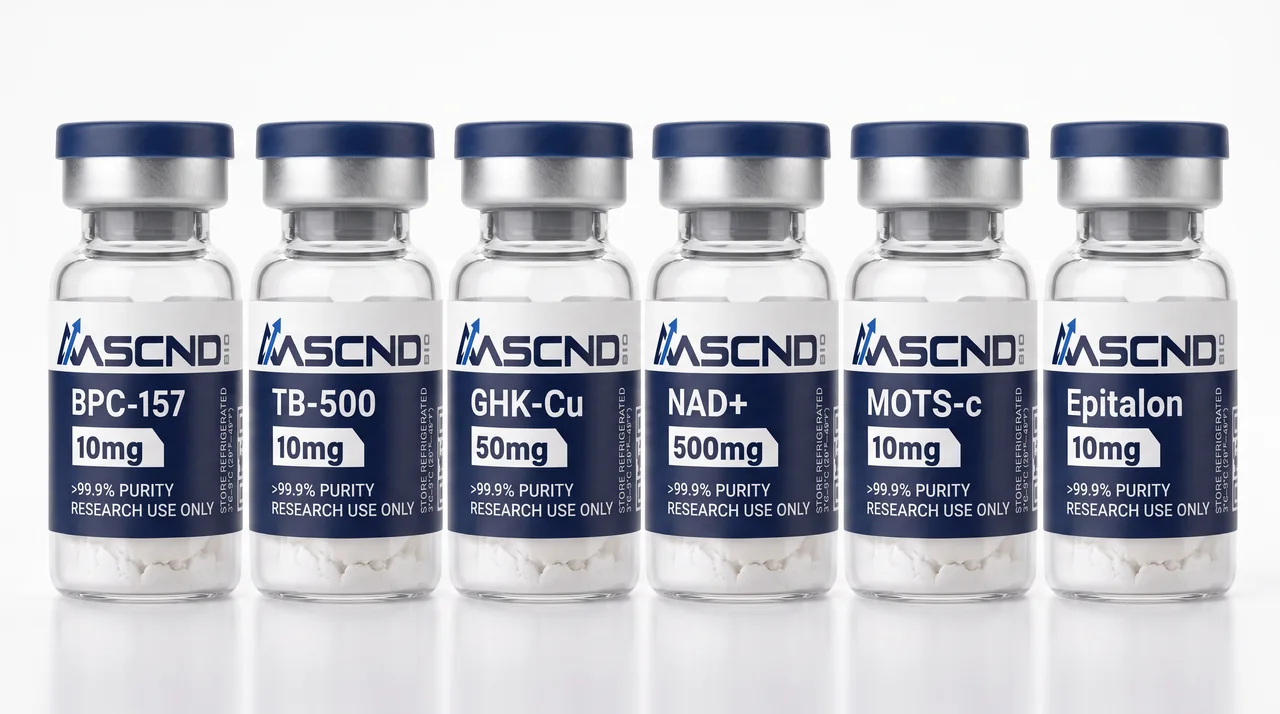
BPC-157 is one of the most searched peptides online, and 2026 brought more regulatory news about it than any year before. The short answer to “is it legal?” hasn’t changed: BPC-157 is not an FDA-approved drug. What has changed is the compounding picture, and that’s where most of the confusion comes from.
This guide lays out what federal agencies have actually said, in order, with links to the documents.
What BPC-157 is
BPC-157 is a synthetic peptide, a short chain of amino acids. FDA’s 2026 review describes it as reported to be made of 15 amino acids and also known as Bepecin or PL-14736. It is promoted online for injury recovery and gut health. Those claims mostly come from early research, not from the large, controlled human trials FDA requires to approve a drug.
The 2026 timeline
Before 2026. FDA placed BPC-157 in “Category 2” of its 503A compounding interim policy on September 29, 2023. Category 2 is for bulk substances that may present significant safety risks. FDA’s stated concerns, which still appear on its safety-risk page: compounded BPC-157 “may pose risk for immunogenicity for certain routes of administration and may have complexities with regard to peptide-related impurities and active pharmaceutical ingredient (API) characterization,” and FDA “has identified no, or only limited, safety-related information for the proposed routes of administration.”
April 2026: nominations withdrawn. The groups that had nominated BPC-157 for compounding withdrew their nominations. FDA moved BPC-157 into a table on its safety-risk page titled “Bulk drug substances nominated but withdrawn.” This is not an approval or a clean bill of health. Being in that table means BPC-157 sits in no interim-policy category at all, and FDA kept its safety statement on the page.
May 2026: FDA staff review. In a briefing memo for its Pharmacy Compounding Advisory Committee, FDA staff evaluated BPC-157 for ulcerative colitis. As summarized by DPS Law, the memo found no USP monograph, no FDA-approved drug containing it, and no approved BPC-157 product in any country. It concluded the substance is not well characterized, that there is a lack of information on safety and immunogenicity, and that there is insufficient evidence on effectiveness. FDA staff proposed not adding BPC-157 to the 503A bulks list.
July 23, 2026: advisory committee vote. The committee voted on BPC-157 and other peptides. FDA had not posted minutes as of mid-November 2026. Trade press reported a narrow vote in favor of allowing BPC-157 to be compounded. Advisory committee votes are recommendations; they don’t change the law.
October 30, 2026: HHS draft policy. The Department of Health and Human Services, not FDA, published a draft “Enforcement Discretion Policy Regarding 503A Compounding Using Certain Peptide Bulk Drug Substances.” HHS said it “does not intend to take enforcement action against a State-licensed pharmacy, Federal facility, or licensed physician compounding a drug product using a peptide bulk drug substance found in Appendix A.” The Federal Register notice itself doesn’t name the peptides; reporting on the appendix lists BPC-157, TB-500, KPV, MOTS-c, Semax, and epitalon, with conditions such as a patient-specific prescription and one peptide per product. HHS calls the draft “not binding on HHS or the public” and says it may revisit the policy if a safety signal or quality problem appears. Comments closed November 13, 2026.
What that means in practice
| Channel | Status as of November 21, 2026 |
|---|---|
| FDA-approved BPC-157 drug | None exists, in the U.S. or elsewhere |
| 503A compounding pharmacy, patient-specific prescription | Not on the bulks list. HHS’s draft policy signals no enforcement under conditions, but it is not final |
| 503B outsourcing facility (office stock) | Not covered by the HHS draft |
| “Research use only” vials sold online | Not approved drugs. FDA has warned sellers that “research” labels don’t change how products marketed for human use are treated |
| Dietary supplements | FDA has not said such products are lawful; treat claims with caution |
State pharmacy and medical boards can also have their own rules, so what a clinic can offer may differ by state.
The safety and evidence gap
The core issue isn’t paperwork. It’s that FDA has said it lacks the information to know whether BPC-157 would cause harm in people at the routes being used. Products bought outside a licensed pharmacy add another layer of risk: FDA’s consumer warnings about unapproved drugs sold online, including peptide drugs labeled “for research purposes,” note that such products could contain the wrong ingredients, too much or too little of the active ingredient, or none at all.
If you’re already using BPC-157 or another peptide, tell your clinician, and report any serious side effects to FDA MedWatch.
What to ask a clinic that offers peptides
If a clinic offers peptide therapy, these questions help you judge it:
- Is this an FDA-approved drug, a compounded drug, or neither?
- Which licensed pharmacy compounds it, and is it a 503A pharmacy filling a prescription written for me?
- What evidence in people supports using it for my condition, and is there an approved alternative?
- How will you monitor me, and who do I call if something goes wrong?
Our safety checklist and sourcing transparency guide cover the same ground in more detail. When you’re ready to compare licensed clinics, browse providers in our directory.
Last updated November 21, 2026. This topic is changing; we’ll update this page when HHS finalizes its policy or FDA acts on the bulks list.